The carbon cycle is the central driver of global climate change. Carbon dioxide gas is the temperature control for the planet, and its changing concentration in the atmosphere is the most immediate concern for the current climate crisis.
The carbon cycle is often divided into two parts, the “slow” geologic carbon cycle,” and the “fast” biological carbon cycle.” To understand climate change, we need to look at both of these cycles working together, and to consider the human perturbations to these cycles.
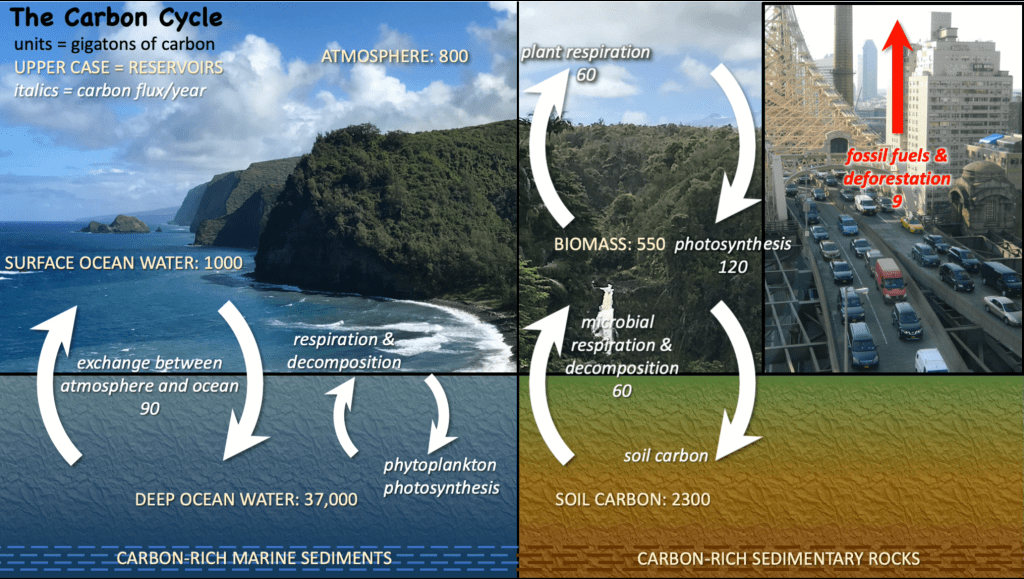
In the geologic carbon cycle volcanic eruptions transfer carbon from Earth’s crust and mantle to the atmosphere. The chemical decomposition and erosion of rocks removes carbon from the atmosphere and moves it back through the ocean, crust and mantle. While carbon is in the atmosphere it becomes available for photosynthesis and incorporation into rapid biological cycles, through plants, soil, and surface waters.
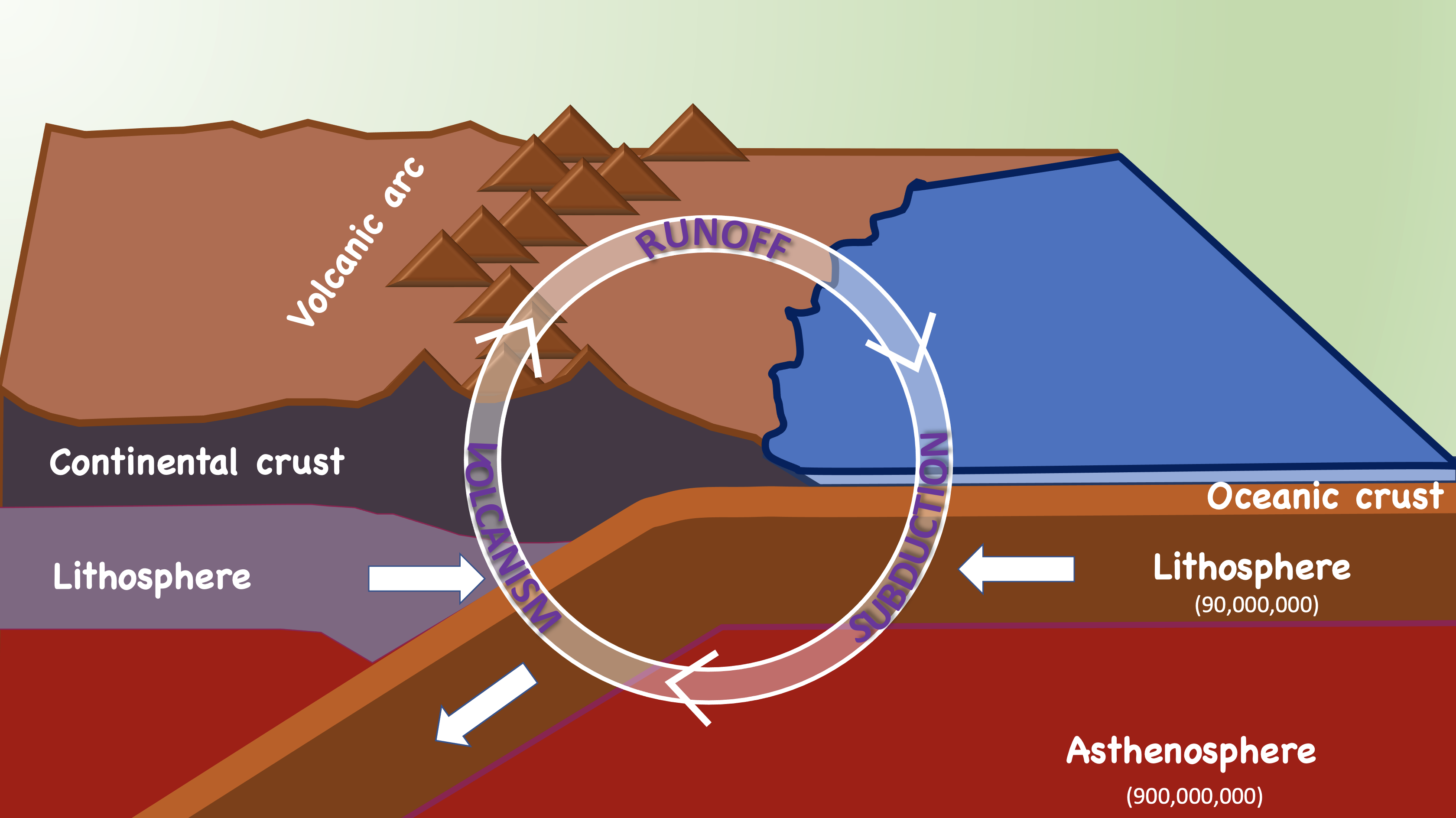
The gears on a bicycle are a good analogy to the two parts of the carbon cycle. On a bike the front gear is large and turns slowly, while the rear gears are smaller and turn very fast. The whole ensemble works together make the bicycle move.
From a climate perspective, humans short-circuit the geologic carbon cycle. Human extraction and burning of fossil fuels takes carbon from the slow geologic cycle and moves it directly to the atmosphere–so quickly that the rest of the carbon cycle can’t keep up.



 Kitchen Climate Science